Map the product and workflow
Collect the part, model, critical contact surfaces, loading direction, handling steps, environment and return or disposal plan.
Product fit engineered into every cavity
Custom PET, PETG, RPET and PVC thermoformed plastic trays engineered around product fit, cavities, handling, stacking, trimming, samples and export packing.
Project specification
Production route
Collect the part, model, critical contact surfaces, loading direction, handling steps, environment and return or disposal plan.
Set cavities, draft, radii, depth, finger access, ribs, clearances, nesting and stacking behavior.
Review PET, PETG, RPET or PVC, color, starting thickness and project-specific documentation.
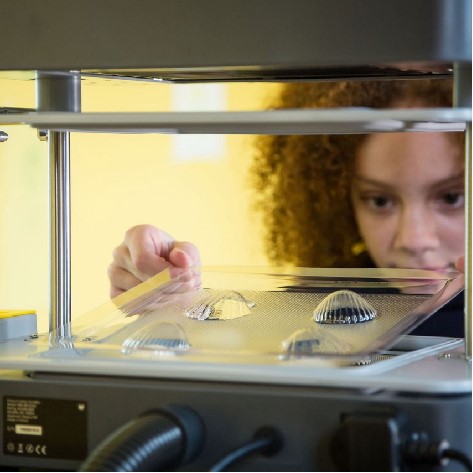
Form representative samples, trim them and test actual product fit, loading, removal and stacking.
Control the approved material, forming route, trim datums and critical dimensions during production.
Pack trays with controlled nesting depth, orientation and carton support to reduce jamming or deformation.
Project logic
A thermoformed tray must fit the product, release from tooling, retain usable wall thickness and work through loading, stacking, transport and unloading. ONE PLASTIC combines PET-family or PVC sheet with vacuum forming, trimming and fabrication for buyer-defined packaging and handling trays. Material compliance, ESD, food-contact or medical claims apply only when a specific grade and supporting documentation are agreed in writing.
Start with more than the product's outside dimensions. Explain how it is loaded, which surfaces can touch plastic, how it is carried, whether it moves through an assembly line and how users remove it. A retail insert that holds one item for presentation has different priorities from a multi-cavity tray that repeatedly moves precision components. Provide a physical sample or accurate 3D model and identify fragile, cosmetic, sharp or contamination-sensitive areas. ONE PLASTIC can then review contact points and orientation before cavity geometry is fixed.
A cavity should locate the item without trapping it. Define positional clearance, acceptable movement, retention features and whether the product is picked by hand, gripper or suction tool. Finger scallops, push-through holes and reliefs can improve unloading but may reduce support. Multi-cavity layouts need enough web between items for forming and trim stability. If packs change by size or SKU, show the full tolerance range. A representative sample should use actual products at relevant limits instead of confirming fit with only one ideal part.
Heated sheet stretches into or over the tool, so deep vertical walls and sharp internal corners can cause non-uniform thinning and difficult release. Draft angles, generous radii and controlled draw ratios help material distribute and allow the part to leave the tool. Starting sheet thickness is not the same as finished wall thickness at every location. Identify structural and cosmetic critical zones so tool geometry and process trials can focus on them. Do not specify paper-sharp corners when the forming process and end use need a practical radius.
PET, PETG, RPET and PVC offer different clarity, forming, toughness, cost and end-of-life considerations. State temperature exposure, chemicals, UV, reuse cycles, static sensitivity and destination requirements. ONE PLASTIC should not imply that every available sheet is automatically food contact, medical, ESD safe or recycled-content certified. If such a property is required, identify the governing market and document before quotation so a specific grade, evidence and production traceability can be reviewed.
Trays that nest too tightly can jam, while excessive spacing wastes carton and freight volume. Rims, lugs, step features and cavity shape can control nesting depth and provide separation. If loaded trays stack, define the load path so the upper tray does not press on the product below. Automated denesting may require more consistent flange and separation behavior than manual use. Test the number of nested trays, expected storage duration and unpacking method during sample approval, not after production cartons arrive.
Tool route depends on quantity, size, detail and program life. A development tool or representative cavity can help confirm geometry, while production tooling supports the agreed output and repeatability. Sample review should include formed appearance, actual product fit, wall distribution at critical areas, release, trimming, stacking and packing. Mark all changes in the drawing or model and identify the approved sample. A change to material, product geometry or cavity depth may require tool modification and renewed approval.
After forming, the tray may need its perimeter, holes, slots or datum features trimmed. Define which dimensions locate the product, mate with a lid, guide a machine or fit a carton. Measurements should reference stable datums because flexible walls can move under inspection pressure. Visual criteria should distinguish functional webbing or formed texture from actual defects. If an insert fits another package component, provide that mating part for the sample review so trim and flange interaction are verified together.
Send product samples or 3D data, critical contact areas, tray outside limits, cavity count, quantity, loading and removal method, material preference, environment, required grade documents, draw and stacking constraints, trim drawing, tolerance priorities, tooling expectation, sample tests, packing and destination. State whether trays ship empty, nested, preloaded or as part of a return loop. A complete workflow brief allows ONE PLASTIC to quote development, tooling, forming and packing as one system.
Applications
Common questions
ONE PLASTIC reviews PET, PETG, RPET and PVC constructions according to clarity, forming, handling, environment and required documentation.
Yes. A physical sample or accurate model plus contact, clearance and handling requirements can support cavity and sample development.
They help heated sheet distribute over the tool and let the formed tray release. Very deep walls and sharp corners can increase thinning and sticking.
No. Thermoforming stretches the starting sheet, so geometry affects local wall thickness. Critical areas should be identified and reviewed on samples.
Yes. Rims, lugs and step features can manage load paths and nesting depth. Test loaded stacking and empty denesting under the intended workflow.
No blanket claim is made. A specific material grade, destination requirement, supporting document and production scope must be agreed for any regulated or functional property.
Yes. Perimeters, slots, holes and datums can be trimmed to an approved drawing, with inspection focused on functional mating dimensions.
Send product data, tray layout, quantity, material and environment, required documents, stacking and trim needs, tooling, sample tests, packing and destination.