Design for a clean laser-cut edge
Kerf, corner detail, sheet thickness and protective film all influence the final result. Very small holes and narrow bridges should be checked before production, especially on thick material.
Clean profiles and fine details
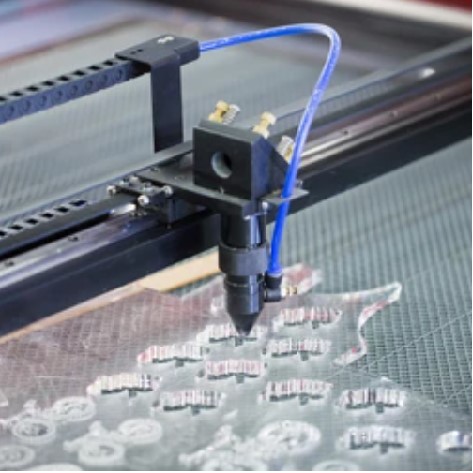
Laser cutting creates detailed profiles, lettering and engraved features directly from digital artwork. It is especially effective for acrylic and selected thin sheet materials used in displays, covers, signs and branded components.
Project logic
Kerf, corner detail, sheet thickness and protective film all influence the final result. Very small holes and narrow bridges should be checked before production, especially on thick material.
A single setup can create outside profiles, internal cutouts, identification marks and decorative engraving. This helps display, signage and equipment-panel projects keep geometry and graphics aligned.
Not every plastic is suitable for laser processing. We review the material and finish requirement first, then recommend laser cutting, CNC routing or mechanical cutting as appropriate.
Applications
Common questions
No. Suitability depends on polymer chemistry, thickness and required edge quality. Acrylic is a common choice; other materials should be confirmed before processing.
Yes, artwork and part-marking details can be included when the material and contrast requirement are suitable.
Laser cutting is strong for fine detail and acrylic edges; CNC is often better for thicker sheets, engineering plastics, pockets, chamfers and controlled mechanical features.