Define product and placement
Confirm product dimensions, unit weight, facings, store location, footprint, campaign life and shopper interaction.
Lightweight printed structures for retail
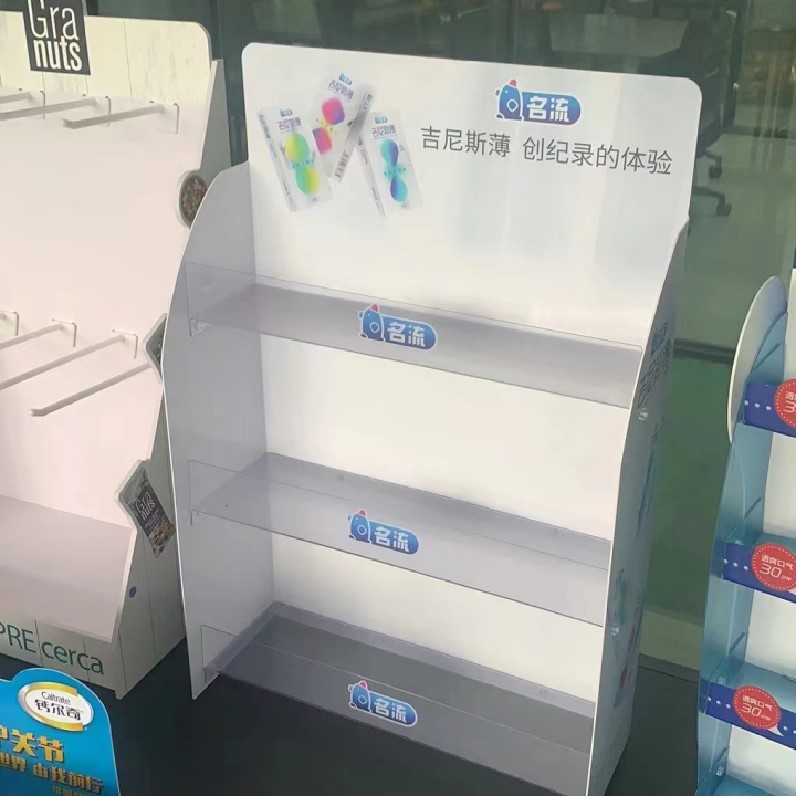
Custom printed PVC foam board counter and floor display stands with contour cutting, shelves, tabs, branding, flat-pack design and retail rollout packing.
Project specification
Production route
Confirm product dimensions, unit weight, facings, store location, footprint, campaign life and shopper interaction.
Set shelves, tabs, braces, back panel, base and stops so weight transfers through the structure.
Choose thickness, color, finish, contour and artwork around viewing distance and store lighting.
Register graphics to panels, slots, folds, tabs, shelves and any hardware openings.
Use representative products to review stability, shelf behavior, access and graphic visibility.
Supply flat kits or assemblies with counted parts, instructions and project/store labels.
Project logic
PVC foam board can be converted into a lightweight branded counter stand, floor display, shelf unit or campaign structure. ONE PLASTIC's official range includes custom supermarket stands with configurable size, shape, color and printed graphics. The project is engineered around product load, store footprint, structural tabs or shelves, assembly and rollout packing—not only the printed front panel.
A display stand should begin with the products it carries and the space it occupies. Provide item dimensions, weight, facings per shelf, replenishment method and available footprint. Also describe whether shoppers remove items from the front, side or peg. A lightweight board can form a useful structure when shelves, tabs, braces and base work together; a visually attractive panel without a load path may bow or tip. ONE PLASTIC develops the size and shape around the retail requirement.
Counter units suit compact impulse products and must preserve cashier or shopper sight lines. Floor stands create more capacity but need a stable base and planned lifting points. Shelf and end-cap units interface with existing fixtures and may require brackets or controlled dimensions. A flat promotional panel has different needs from a multi-tier rack. State the store position and any retailer envelope before structure and artwork are approved.
Interlocking tabs, slots, shelf lips, side walls and rear braces distribute product load and keep the display square. Their geometry also determines assembly sequence and whether the unit can ship flat. Avoid placing critical graphics where tabs overlap or panels flex. If hardware is used, include type, count and access in the drawing. A representative loaded mockup is the best way to confirm that the structure and merchandising plan work together.
PVC foam board supports direct printing and applied graphics, but artwork must follow the cut shape and assembled viewing surfaces. Include bleed, cut paths, slots, tabs and no-print hardware areas. Multi-panel structures need a visual sequence so graphics line up after assembly. Color should be approved on the selected board rather than a paper proof. For store campaigns, provide brand guidelines and identify whether every display shares one design or uses location-specific versions.
Load a sample stand with the intended number and weight of products. Check shelf deflection, stability, product removal, label visibility, base position and whether graphics remain unobstructed as inventory changes. Assemble it using the instructions and tools available to store staff. Record structural and artwork changes together; moving a shelf can affect both load and branding. This turns the sample into a controlled rollout standard.
Flat packing can reduce export and store-distribution volume, but panels must assemble without damaging printed faces or weakening tabs. A kit needs counted components, hardware, labels and simple instructions. Subassembled or fully assembled stands reduce store labor but require more carton space and corner protection. Tell ONE PLASTIC whether displays are shipped to one warehouse or allocated by store so carton markings and bundle quantities can match the rollout plan.
Printed panels can rub or mark when loose inside a carton, while exposed foam-board edges can dent under concentrated pressure. Packing can use clean interleaving, corner protection, part bundles and fitted cartons. Heavy hardware should be isolated from graphic surfaces. Store kits should be labeled without placing adhesive on a visible panel. If units will be re-used or relocated, state the expected handling so joints and packing can be reviewed accordingly.
Send product dimensions and weight, facings, display format, store footprint, overall height, shelves and hooks, board color or thickness if known, artwork, quantity by design, campaign duration, sample requirement, assembly preference, store allocation, packing and destination. If there is no structure yet, provide a merchandising sketch and photos of the target retail environment.
Applications
Common questions
Yes. ONE PLASTIC's official product page lists custom sizes, shapes, colors and tier configurations. Provide the retail footprint and product load.
Yes. Direct printing or another approved graphic route can be registered to contours, shelves, tabs and assembled panels.
Yes. Shelf span, product weight, facings, braces and base must be reviewed as one load-bearing structure.
Many tab-and-slot structures can be designed as flat-pack kits. Assembly, part labels, hardware and instructions should be planned during design.
A representative mockup or sample can be reviewed to validate size, print, assembly, stability and product loading before rollout.
No blanket outdoor-life claim is made. State weather, UV, wind, moisture and campaign duration so material and structure can be reviewed.
Store or campaign allocation, carton labels and kit quantities can be included when the distribution list is provided.
Send products, load, facings, footprint, format, graphics, quantity, sample, assembly, packing, allocation and destination.