Define what the box holds
Confirm product dimensions, loading direction, visibility, weight, handling, access and any clearance needed around the item.
Clear, polished and built to your dimensions
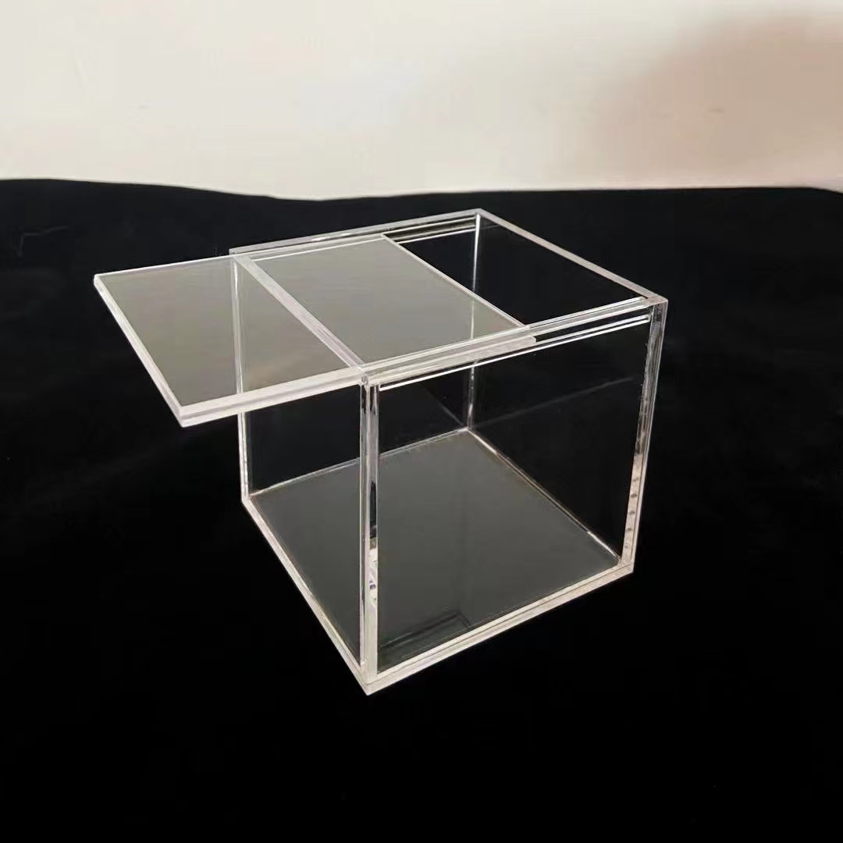
Custom acrylic boxes and display cases made to size in clear, colored or frosted acrylic, with polished edges, lids, handles, UV printing, engraving and export packing.
Project specification
Production route
Confirm product dimensions, loading direction, visibility, weight, handling, access and any clearance needed around the item.
Lock inside and outside dimensions, thickness, opening style, lid, handles, joints, visible faces and accessory locations.
Laser or CNC cut the acrylic according to geometry, then finish visible edges to the approved cosmetic standard.
Form or join panels in a controlled sequence while protecting clear faces and keeping the structure square.
Position UV printing, engraving, hinges, handles, dividers or other agreed components from the finished-box datums.
Review dimensions, panel alignment, joints, edge finish, lid function and graphics before individual protective packing.
Project logic
A custom acrylic box is judged from every visible face: panel alignment, edge clarity, joints, lid movement and printed graphics all contribute to the finished appearance. ONE PLASTIC's published product range includes made-to-size boxes in clear or colored acrylic, with thickness, lid, handle, UV-printing and engraving options. The project starts with the item being displayed or protected, then defines the structure and packing around it.
A display box, packaging box, storage organizer and protective cover may share the same clear material but require different construction. A retail display case prioritizes visibility and access. A cosmetic or jewelry box may need compartments, branding and a compact lid. A museum-style cover places more emphasis on uninterrupted viewing faces and protection from handling. An equipment enclosure may require ventilation, cable access or removable panels. ONE PLASTIC can work from a drawing, sample or product brief, but the intended job should be identified before dimensions and thickness are fixed. This helps avoid ordering a visually attractive box that is difficult to load, clean, ship or use.
One of the most common specification errors is providing a single length, width and height without saying whether they describe the internal space or the finished outside. The difference includes sheet thickness, lid overlap, bonded joints and any base or divider. Begin with the product that must fit inside and state the minimum clearance needed for loading, labels, cables or air movement. Then define the overall envelope if the box must fit a shelf, counter or shipping carton. Drawings should also show which dimension is controlled most tightly and where measurement begins. ONE PLASTIC can review both inside and outside requirements, but they should not be left to inference during fabrication.
ONE PLASTIC's existing acrylic-box page publishes thickness options from 2 mm through 20 mm, but that range is not a recommendation that every thickness suits every box. Small presentation boxes can use a lighter construction than a large cover or a case supporting hardware. Long panels may flex, while an unnecessarily thick panel adds weight and changes the visual proportion of joints and edges. Thickness should be reviewed with overall size, unsupported span, contents, expected handling, lid structure and desired appearance. Clear, colored and project-specific frosted acrylic can also change how edges and joints are perceived. If the buyer has not selected thickness, provide the product weight and required dimensions so the fabricator can suggest a practical starting point.
Acrylic boxes can be assembled from separately cut panels or designed with heat-bent sections and fewer joints. Bonded-panel construction provides flexibility for rectangular cases, bases, dividers and thicker parts, but clear joints make alignment, adhesive control and edge preparation visible. Heat bending can create clean corners and reduce the number of bonded edges, although bend radius, material thickness and geometry must be planned. Many products use a combination: bent side walls with a bonded base, or cut panels with a separate fitted cover. The best route follows the cosmetic surfaces, size, access and quantity rather than a rule that one method is always premium. The approved drawing should make seam locations and viewing faces explicit.
ONE PLASTIC's published product options include hinged lids, sliding lids and open-top designs, with or without handles. A removable cover creates a simple clean display but needs clearance for lifting. A sliding lid requires a planned direction of travel and enough space for the user to operate it. A hinged lid needs hardware placement, an opening angle and support for the panel weight. An open top may be appropriate for retail access, ballot collection or storage. Other dividers, supports or application-specific hardware can be reviewed from the drawing rather than assumed. Show how often the box opens, who uses it and whether the product must be secured, replenished or cleaned through the opening.
Acrylic exposes fabrication details that an opaque plastic can hide. Visible edges may need an agreed polished appearance, while utility edges inside a base or concealed joint may use a different finish. Clear bonded seams should be reviewed for alignment, adhesive marks and acceptable visual variation. Sharp corners can be softened where handling requires it, but corner treatment changes finished dimensions and should appear on the drawing. Protective film and clean handling remain important through cutting, finishing and assembly because scratches are difficult to hide on a transparent case. Buyers should mark the primary viewing faces and normal viewing distance so the cosmetic standard is concentrated where it creates value.
ONE PLASTIC's acrylic-box page publishes UV-printing and engraving options. A logo can sit on the outside face, or selected graphics can be printed on the second surface of clear acrylic and viewed through the panel where the design permits. Engraving can create identification, decoration or a frosted visual effect without adding a separate printed layer. Artwork should reference the assembled-box edges, lid and openings, not only an isolated flat panel. Keep critical text clear of bends, adhesive joints and hardware. Supply outlined vector artwork, identify the viewing direction and state the required color or opacity. A representative proof helps align graphic position with edge clarity and the product visible inside.
The best display box does more than surround the item; it holds the item in the intended position. If the project uses a platform, divider, slot, foam insert, printed card or removable support, include that component and its material in the drawing. The support may affect the internal height, loading sequence, balance and packing method. For cosmetics or jewelry, compartments should reflect the product assortment and replenishment process. For collectibles or samples, a base can position the object without blocking important viewing angles. ONE PLASTIC can review application-specific components, but the buyer should provide product dimensions, weight and preferred presentation rather than asking the fabricator to guess from an exterior box size.
Acrylic box approval should cover more than outside dimensions. Review internal fit, lid movement, handle or hinge operation, panel alignment, squareness, visible joints, edge finish, graphic position and protective packing. When a physical sample is required, mark every requested change on a revised drawing or written approval record so the production version does not rely on photographs alone. Acrylic appearance changes with lighting and background, so evaluate a clear or colored sample in a representative setting. For repeat orders, use the approved revision and state whether artwork, hardware or packing has changed. This creates a stable reference without inventing one universal tolerance or cosmetic rule for every box size.
A finished acrylic box uses more shipping volume than a flat sheet and needs protection at corners, joints, lids and printed faces. Depending on the design, protective film can remain on accessible surfaces, while individual bags, soft interleaving, foam, dividers and fitted cartons reduce rubbing and movement. Hinged lids and loose accessories should be secured so they cannot strike a clear panel. Large cases may require internal support to resist distortion during stacking. The buyer should state carton limits, labeling needs, destination and whether packaging will be opened in a clean retail environment. ONE PLASTIC can then review individual and export packing as part of the product rather than adding it after fabrication.
For a useful quotation, send the internal and external dimensions, preferred acrylic color and finish, thickness if fixed, quantity, product weight, lid or opening style, handles or hardware, divider or insert information, artwork, cosmetic expectations, packing form and destination. A sketch should label front, back, top and viewing direction. If the box is based on an existing sample, explain the changes and send photographs with a scale. If thickness or construction is open for recommendation, provide the application instead of choosing only from price. State whether you need a drawing review, representative sample or direct repeat production from an approved specification.
Applications
Common questions
Yes. ONE PLASTIC's published product page offers custom size, shape and design. Provide both internal usable space and maximum external dimensions so thickness, joints, lid and clearances can be included correctly.
ONE PLASTIC's existing acrylic-box page publishes options from 2 mm to 20 mm. Final thickness depends on box dimensions, unsupported span, product weight, lid and hardware, handling and the desired visual proportion.
Clear and colored acrylic are published options, and project-specific frosted appearance can be reviewed. Color, transparency, surface and edge expectations should be shown on a material or visual reference.
Yes. Published options include hinged lids, sliding lids and open-top designs. A removable cover and application-specific hardware can also be reviewed from the drawing, subject to the box structure and use.
ONE PLASTIC's published options include designs with or without handles. Dividers, supports, inserts and other project-specific components can be reviewed when their dimensions, material and loading function are included in the brief.
Yes. ONE PLASTIC publishes UV printing and engraving for acrylic boxes. Provide vector artwork, color or opacity references, viewing side and the finished position relative to edges, lids and openings.
A bonded box joins separately cut panels and supports flexible rectangular construction. A heat-bent design forms one or more corners from a sheet and can reduce seam count. Size, thickness, bend radius, access and cosmetic faces determine the practical route.
A dimensioned PDF and editable CAD file are preferred. A marked sketch or existing sample can start the review. Include inside and outside dimensions, thickness, opening style, product weight, hardware, artwork, quantity, packing and destination.
A representative sample can be included in the project route when required. Review dimensions, fit, lid movement, joints, edge finish, graphics and packing, then record any change in the approved drawing or specification.
Packing can combine protective film, individual bags, soft interleaving, cushioning, dividers and fitted export cartons. The exact method follows box size, joint design, lid or hardware and the risk of surfaces rubbing in transit.