Define jurisdiction and component scope
Identify destination, governing project documents and whether the deliverable is a face panel, insert or fabricated sign component.
Printed and fabricated guidance panels
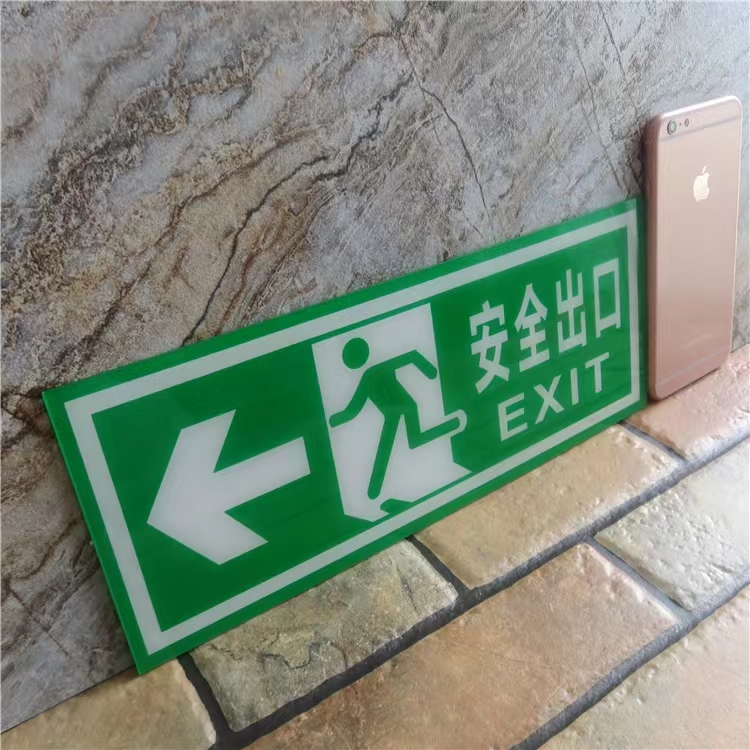
Buyer-specified acrylic exit sign panels with custom cutting, engraving or printing, holes and mounting details; code, illumination and final approval remain project responsibilities.
Project specification
Production route
Identify destination, governing project documents and whether the deliverable is a face panel, insert or fabricated sign component.
Lock wording, language, symbols, arrows, color, viewing sides, orientation and any mirrored artwork.
Set acrylic construction, thickness, finish, holes, notches, edge treatment and interface to the buyer's sign system.
Review the physical panel or approved sample for graphics, visibility, fit and dimensional relationship to the mating hardware.
Fabricate panels to the controlled drawing and artwork while protecting critical visible faces and mounting features.
Check dimensions, orientation and finish, then pack panels to prevent scratching and edge damage in transit.
Project logic
ONE PLASTIC fabricates custom acrylic panels used as faces or components in exit and wayfinding sign systems. The buyer defines the destination jurisdiction, approved wording, symbols, arrows, colors, viewing side, illumination interface and mounting. This is a made-to-drawing panel service, not a blanket claim that a panel alone is a complete certified emergency-lighting system.
This page covers the acrylic face, insert or fabricated panel identified on the buyer's drawing. It may be cut, polished, drilled, printed or engraved and prepared to fit a separate frame, light source or mounting system. It does not automatically include electronics, battery backup, wiring, photometric design, installation or third-party certification. State which components are supplied by ONE PLASTIC and which belong to the buyer or system integrator. A clear scope prevents an attractive panel from being mistaken for a complete life-safety product.
Exit wording, pictograms, arrows, colors, viewing distance, illumination and mounting requirements vary by jurisdiction and project. The buyer, designer or responsible authority should provide the governing standard, approved sign schedule and artwork. ONE PLASTIC fabricates to that information but does not choose the legal symbol or certify an installation in an unknown destination. If multiple markets are included, separate each approved language, arrow and artwork revision in the order instead of relying on one universal design.
A small arrow change can create a different part number. Identify left, right, up, down or no-arrow versions, the reading direction and whether the panel is single or double sided. For reverse printing or engraving viewed through clear acrylic, provide mirrored artwork and label the front face. Text, pictograms and borders need reliable clearance from trimmed edges, holes and brackets. The proof should show every variant and quantity so production does not infer direction from file names such as final or new.
Clear, colored and frosted acrylic create different graphic and lighting effects. Thickness, edge finish, holes, notches and panel size must suit the buyer's frame, suspension hardware or edge-lighting interface. If the panel mates with an existing housing, supply an accurate drawing or physical reference and define allowable fit. Engraved lines, printed color and white layers can interact differently with incident or edge light, so a representative trial with the intended system is more reliable than judging an isolated panel on a desk.
UV or screen printing can place opaque or translucent graphics on a panel, including second-surface constructions on clear acrylic. Engraving can create recessed marks or interfaces intended for a buyer-defined lighting concept. These methods are not interchangeable: viewing side, depth, white ink, color reference, line width and background all affect appearance. ONE PLASTIC can manufacture the approved panel, while lighting output and finished-system visibility should be validated by the responsible system supplier using the actual luminaire and installation conditions.
A panel sample should be installed in the intended frame or mounting arrangement. Check hole position, edge engagement, panel orientation, graphic readability, glare and the relationship to the light source. If there are double-sided graphics, verify that the reverse side does not create confusing show-through. Any approval should record the sample, drawing and artwork revision together. The project authority remains responsible for code, visibility, illumination, electrical and installation acceptance; a fabrication sample confirms only the agreed component attributes.
Production inspection can verify panel dimensions, hole and notch position, printed or engraved artwork, arrow orientation, surface condition and packing. It cannot turn an unspecified acrylic panel into a certified emergency system. If the buyer needs a particular material document, traceability format or third-party test, request it before quotation so availability and scope can be reviewed. Do not place a certification mark in artwork unless the buyer has provided written authorization and the finished product is legitimately covered.
Send the destination country and project, governing drawing or sign schedule, panel dimensions and thickness, acrylic color and finish, artwork for each language and arrow, viewing side, print or engraving requirement, holes and mounting interface, quantity by part number, approved frame or lighting reference, documentation, sample plan, packing and destination. Identify all items that are outside ONE PLASTIC's component scope, especially lighting, electronics, installation and regulatory approval.
Applications
Common questions
This page covers buyer-specified acrylic face panels and fabricated components. Lighting, electronics, installation, code selection and finished-system certification are not automatically included.
Yes. Printing or engraving can be produced to approved artwork, material, viewing-side and system-interface requirements.
The buyer or responsible project authority must provide the destination requirements and approved wording, pictogram, arrow, language and color.
Yes. Treat each direction and language as a controlled part number with its own approved artwork and order quantity.
Yes. Second-surface printing through clear acrylic can be reviewed when the artwork is mirrored and front face, white ink and viewing direction are identified.
Provide an accurate drawing, mating dimensions or physical reference. Fit should be confirmed with a representative sample before production.
Only when the buyer supplies valid written authorization and confirms the delivered product is covered. ONE PLASTIC does not invent or imply certification.
Send project destination, drawings, approved artwork variants, material, dimensions, print or engraving, mounting interface, quantity, documentation, sample and packing needs.