Map product and store space
Confirm product dimensions, weight, facing count, replenishment, viewing angle and available counter or wall footprint.
Retail structures with nearly invisible material
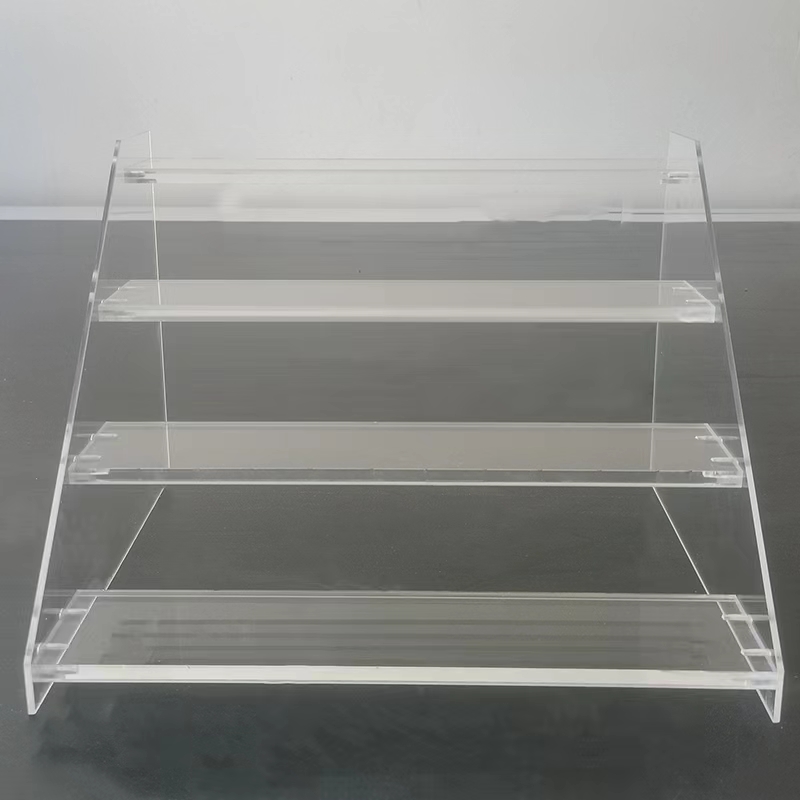
Custom acrylic display stands, racks, shelves, brochure holders and countertop POS units with cutting, polishing, bending, bonding, printing and rollout packing.
Project specification
Production route
Confirm product dimensions, weight, facing count, replenishment, viewing angle and available counter or wall footprint.
Set shelves, tiers, pockets, dividers, stops, feet and hardware around the merchandising plan.
Select acrylic color, thickness, visible edges, print location and any PETG component.
Create panels and features, then finish visible edges and heat-bend components according to the drawing.
Register graphics to the finished display, join components and install agreed hardware or inserts.
Load representative products, verify stability and pack by store, campaign or assembly sequence.
Project logic
A custom acrylic display should present the product without competing with it. ONE PLASTIC manufactures acrylic sheet and fabricates countertop, tiered, brochure, menu, shelf and point-of-sale displays using cutting, polishing, heat bending, bonding, printing and assembly. The design is developed around product load, footprint, replenishment, branding and store-rollout packing.
Provide product dimensions, weight, number of facings, preferred viewing angle, replenishment method and available footprint. A cosmetics tester display has different access and cleaning needs from a brochure rack or electronics stand. The structure should guide product placement and preserve label visibility without creating difficult-to-clean corners. A planogram, sample product or simple store sketch helps ONE PLASTIC turn the display objective into dimensions and component relationships.
Countertop units need a controlled footprint and stable base. Tiered racks increase visibility but change load and reach. Wall-mounted displays need a confirmed mounting interface. Brochure and menu holders need pocket depth and easy insert replacement. Floor or larger POS structures may use multiple materials or a kit format. The page targets custom acrylic displays, so every format is quoted from a drawing rather than represented as a universal catalog item.
ONE PLASTIC currently lists a typical 2–10 mm acrylic range for display projects, but shelf span, unsupported height, product weight and hardware determine the final choice. Clear, white, black, colored and frosted acrylic change both appearance and edge visibility. PETG can be reviewed for selected components where impact behavior is a priority. Provide the product load and any deflection concern instead of choosing thickness only from a photograph.
Retail staff must refill and clean a display without removing every component or scratching the product zone. Openings, finger access, removable dividers and shelf stops should follow the stocking process. High-contact edges can be softened, while hardware and joints should remain accessible for inspection. If the display will move between campaign locations, define lifting points and whether it must be disassembled. These operating details influence structure as much as the front appearance.
Printing can place a logo, product story, price message or color block directly on the display. Clear acrylic may use second-surface graphics and white ink. Artwork should reference shelves, bends, joints and the product facings, with critical text kept clear of obstructions. Engraving and applied graphics can also be reviewed. A branded sample should be evaluated with the real product and store background because transparency changes how colors and hardware appear.
A dimensional display can still fail if products tip, labels hide or the base moves during customer interaction. Load a representative sample with the intended facings and operate replenishment as store staff would. Review shelf deflection, stops, access, graphics, edges, joints and footprint. Record changes in the drawing before rollout. ONE PLASTIC can then inspect production units against a defined display rather than a visual rendering alone.
Small bonded acrylic units often ship assembled with individual protection. Larger racks may use mechanical joints or component kits to reduce freight volume and breakage risk. A kit needs clear part labels, hardware counts and assembly sequence; an assembled display needs cushioning around edges, shelves and printed faces. For multi-store programs, pack by store or campaign allocation when specified. Delivery form should be fixed during design because it can alter joints and hardware.
Send product samples or dimensions, weight, facings, display type, footprint, acrylic color and finish, thickness if fixed, shelves and pockets, artwork, hardware, quantity, sample requirement, assembly preference, store allocation, packing and destination. If ONE PLASTIC should develop the structure, add a merchandising sketch and photos of the intended retail location.
Applications
Common questions
Yes. Supply the product, weight, facing count and retail footprint so fit, access and structure can be reviewed and documented.
Clear, white, black, colored and frosted options are listed. Final color, finish and thickness follow the project and physical approval.
Yes. UV or screen printing, engraving and selected applied graphics can be reviewed with the finished viewing side and product layout.
Yes. Shelves, tiers, pockets, dividers, stops and hardware are designed around product dimensions and replenishment.
PETG can be reviewed for selected impact or forming needs. Appearance, stiffness, printing and joining differ, so it is not an automatic substitute.
Yes. A representative display can validate product fit, stability, graphics, access, cleaning and packing before repeat production.
Some structures can use mechanical joints or kits. Bonded clear displays may need assembled packing. Delivery form should be considered during structural design.
Send product data, facings, footprint, display format, material, graphics, hardware, quantity, sample, delivery and packing requirements.