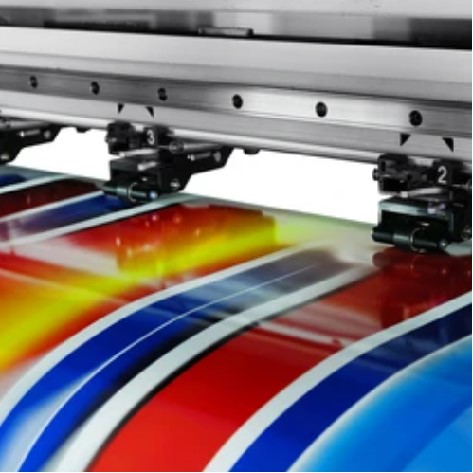
Printed clear sheet for forming and packaging

PET and PETG Plastic Sheet Printing

Printed PET-family sheet is widely converted into clear packaging, graphic panels, folding boxes and formed components. The search term is easily confused with PETG 3D-printer filament, so this page focuses specifically on flat plastic sheet. ONE PLASTIC coordinates PET, APET, RPET, PETG or GAG selection with printing, cutting, creasing, folding and forming around the finished product.

Printing graphics on PET and PETG plastic sheets
Sheet familiesPET, APET, RPET, PETG and GAG
Project outputPrinted sheet through finished component
Critical controlMaterial proof plus conversion registration

Project logic

Make the process fit the product.

01

This page covers PETG plastic sheet, not 3D-printing filament

PETG searches often return printer settings, filament or build surfaces. ONE PLASTIC's service here is for flat PET-family plastic sheet used in packaging, displays and fabricated products. The order may begin as a roll or sheet, then be printed, cut, creased, folded or formed. Buyers should provide finished dimensions, sheet thickness, artwork and conversion requirements rather than 3D-printer model information. This clear distinction helps the project team select a sheet construction and print route that match the industrial conversion process.

02

Select PET, APET, RPET, PETG or GAG around the application

PET-family names are related but not interchangeable. APET is common in clear packaging conversion. RPET adds recycled content but can change background color or visual consistency. PETG is chosen for tough clear fabrication and forming behavior. GAG combines layers for selected processing needs. The final choice depends on clarity, stiffness, recycled-content target, crease or bend behavior, forming depth, print appearance and destination requirements. Approve graphics on the production construction because a color or white layer viewed through one sheet may look different on another.

  • State clarity, haze and background-color expectations
  • Identify recycled-content or documentation requirements
  • Describe folding, bending or forming after printing
  • Confirm any product-contact or destination requirement before material approval
03

Design clear graphics with white ink and viewing direction

Like clear PVC and acrylic, transparent PET and PETG require a deliberate layer plan. Face printing leaves ink exposed on the viewed surface. Reverse printing places mirrored artwork behind the sheet for viewing through it. White ink can support color, define opaque information zones or leave transparent windows that reveal the packaged product. The intended background matters: a translucent color over a dark product will not match the same color over a white proof. Mark front, back, viewing side and white coverage in the artwork and use a representative sample for important packaging or display programs.

04

Register printing to folds, cut lines and formed geometry

The print file should share datums with the dieline or part drawing. Folding cartons need panel order, creases, tabs and adhesive zones. Display panels need holes and outside profiles. Thermoformed components require an understanding of where graphics may stretch or move as the sheet enters a cavity. Critical text should not sit on an uncertain trim edge or high-strain fold. ONE PLASTIC can coordinate material, print and conversion in one workflow, but a finished sample may be needed when a flat proof cannot predict the final geometry.

05

Approve the exact sheet and print combination

Surface, treatment, protective film, ink and cure work as a system. A print that adheres to one PETG construction should not automatically be approved for APET or RPET from another production route. When durability or later fabrication matters, the proof should use representative material and pass through the relevant cutting, creasing, bending or forming step. Record material, thickness, print orientation, color reference and artwork revision with the approval. This makes repeat orders easier to control and avoids using a generic sample that does not represent the production stack.

06

Treat recycled content as a visual and documentation input

RPET can support a recycled-content objective, but the buyer should define the required construction, evidence and destination rather than assuming every recycled sheet is equivalent. Background tint, small inclusions or clarity expectations can affect transparent graphics. If color is viewed through the sheet, approve the complete material and ink stack. Also state whether the recycled-content request applies to the whole item, a specific layer or a commercial claim that needs supporting documentation. ONE PLASTIC can review available material options without inventing certification or percentage claims for an unspecified project.

07

Inspect packaging and display graphics after conversion

A correct flat print can become misaligned after die cutting, folding or forming. Inspection should check the relationship between graphics and the finished panel, tab, window, cavity or trim. Clear-product projects also need attention to scratching, dust, white-ink coverage and interleaving. For folding boxes, verify closure and panel order. For formed components, review distortion and trim position on a representative part. Define visible faces and normal viewing distance in the approval standard so the team knows where appearance is critical.

08

Plan delivery around the buyer's converting line

ONE PLASTIC can supply printed full sheets, cut panels, die-cut blanks, folded boxes or printed formed components, depending on the project. Full sheets give the buyer control of later conversion. Registered blanks reduce cutting and creasing work. Finished items simplify filling or assembly but usually require more protective packing and shipping volume. State how the material enters the buyer's line, whether protective film remains and how parts should be labeled or stacked. The delivery form belongs in the first quote because it changes both manufacturing scope and logistics.

09

Prepare a PET/PETG printing RFQ

Provide the PET-family construction if known, recycled-content need, thickness, surface, roll or sheet format, final dimensions, quantity by artwork, vector files, viewing side, white ink, color reference, cut and crease lines, bending or forming steps, approval method, packing and destination. If material selection is open, explain clarity, stiffness, impact and conversion needs. For formed or folded graphics, include a product model, dieline or sample so the team can review print movement before quotation.

Project specification

Define the deliverable before production.

Available delivery formsPrinted PET/PETG full sheetsCustom-cut graphic panelsDie-cut packaging blanksPrinted folding boxes and sleevesPrinted and formed plastic components
Supply form
Printed full sheet, roll-converted blank, cut panel or finished component
Surface
Clear, colored, matte or project-specific treated construction
Graphic plan
Color, white ink, reverse print, windows and cut/crease datums
Conversion
Cutting, die cutting, creasing, folding, bending or representative forming trial
Approval
Production-material proof for color, opacity, adhesion and viewing side
Packing
Interleaved or protected to preserve clear and printed surfaces

Production route

One controlled path from brief to delivery.

01

Define the converted product

Identify packaging, display, folding or forming requirements before choosing the polyester-sheet construction.

02

Select PET-family material

Compare PET, APET, RPET, PETG or GAG around clarity, recycled-content target, stiffness, fold and forming behavior.

03

Prepare artwork and datums

Map color, white ink, viewing side, cut paths, creases and forming references to the flat sheet.

04

Approve representative print

Review appearance and adhesion on the actual sheet construction, including the background visible through clear areas.

05

Print and convert

Register printing to cutting, die cutting, creasing, folding or a confirmed forming route.

06

Inspect and pack

Check print position and converted function, then prevent clear faces and graphics from rubbing in transit.

Applications

Where this route creates value.

01Clear printed packaging
02PETG display panels
03Printed folding cartons
04Branded thermoformed components
05Retail graphic sleeves
06Product-information panels
07RPET promotional packaging
08Cut and printed transparent parts

Common questions

Details buyers ask before an RFQ.

Is this service for PETG 3D-printing filament?+

No. This page covers printing on flat PET, APET, RPET, PETG and GAG plastic sheet for packaging, displays and fabricated products.

Can PETG plastic sheet be UV printed?+

A compatible UV route can be reviewed on the selected PETG sheet. The exact material, surface, ink, cure and later fabrication should be approved together.

Can clear PET be reverse printed?+

Yes, where the construction and artwork are suitable. The image is mirrored and viewed through the sheet; white ink, transparent zones and layer order must be defined.

Can RPET sheet be printed?+

Yes. Recycled-content construction, clarity and background tint should be confirmed before graphic approval, especially when color is viewed through the material.

Can printed PET or PETG be folded into boxes?+

Yes. Printing, die cutting, creasing, folding and bonding can be planned as one route using a suitable construction and an approved converted sample.

Can printed PETG be thermoformed?+

Some projects can combine printing and forming, but heat, stretch, artwork position and trim must be evaluated on a representative formed trial.

Can you supply printed sheets instead of finished parts?+

Yes. Delivery can be printed full sheet, cut panel, die-cut blank or finished component according to the buyer's converting setup.

What files are needed?+

Send a dimensioned drawing or dieline plus outlined vector artwork with color, white ink, cut, crease and viewing-side information.

What should be included in the quote request?+

Include material construction, thickness, size, quantity, artwork, conversion, recycled-content needs, approval method, packing and destination.